Overview
Martin Shkreli founded Turing Pharmaceuticals in February 2015. Seven months later, he raised the price of Daraprim from $13.50 to $750 per pill. He was arrested in December 2015 on securities fraud charges unrelated to Daraprim pricing, convicted in August 2017 on three of eight counts, and sentenced to seven years in federal prison. After his release in September 2022, the FTC ordered him to pay $64.6 million in disgorgement and barred him from the pharmaceutical industry for life.
| Date | Event |
|---|---|
| March 17, 1983 | Born, Brooklyn, New York |
| ~2000 | Internship at Cramer Berkowitz, age 17 |
| 2004 | BA, Baruch College |
| 2006 | Founded Elea Capital Management |
| September 2009 | Co-founded MSMB Capital Management |
| February 2011 | MSMB Capital wiped out (Orexigen short) |
| 2011 | Founded Retrophin Inc. |
| September 2014 | Fired as Retrophin CEO |
| February 2015 | Founded Turing Pharmaceuticals |
| August 10, 2015 | Acquired Daraprim for $55 million |
| September 2015 | Raised Daraprim price to $750 per pill |
| December 17, 2015 | Arrested for securities fraud |
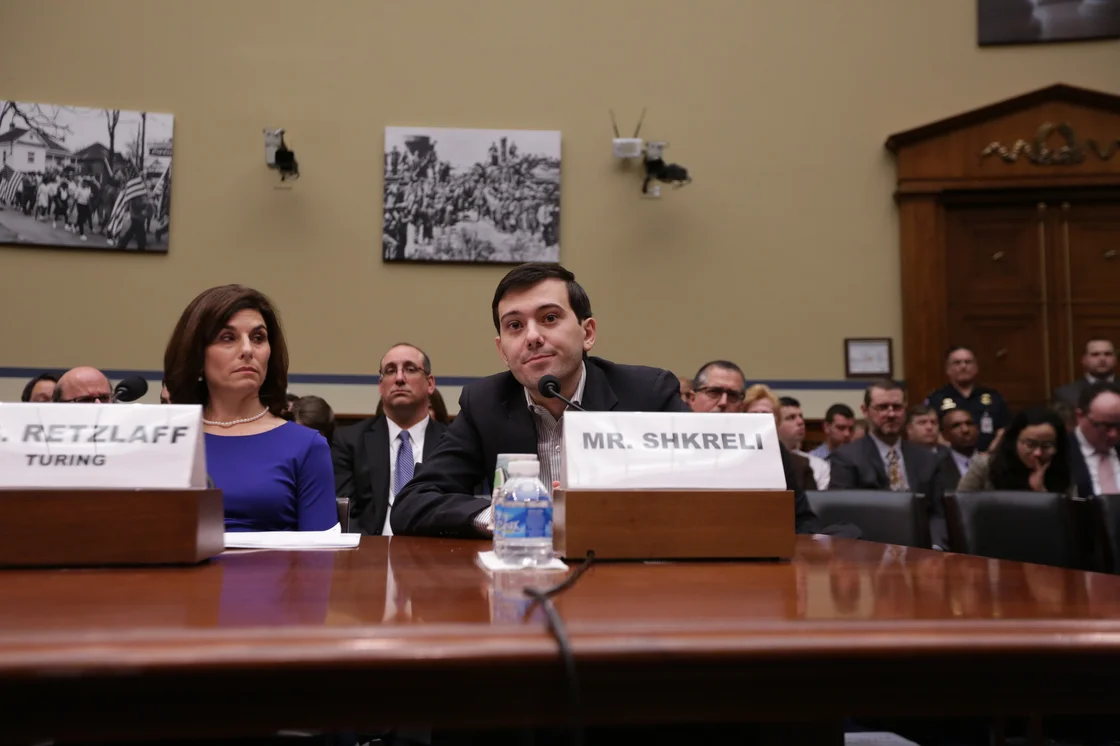
| February 4, 2016 | House Oversight hearing (Fifth Amendment) |
| August 4, 2017 | Convicted on 3 of 8 counts |
| March 9, 2018 | Sentenced to 7 years |
| ~September 2022 | Released from federal custody |
| December 2022 | FTC settlement: $64.6M disgorgement, lifetime pharma ban |
Early Life
Shkreli was born on March 17, 1983, in Brooklyn, New York. His parents were Albanian immigrants who worked as janitors. He grew up in a rent-controlled apartment in Sheepshead Bay with two sisters and a brother. One sister became seriously ill from an infection during childhood. He has said that experience led him into pharmaceuticals.
He attended Hunter College High School, a competitive public school in Manhattan. Public records do not clearly show whether he graduated from Hunter or finished through an alternative programme. He earned a bachelor's degree in business administration from Baruch College in 2004.
Wall Street (2000 to 2009)
At about 17, around 2000, Shkreli got an internship at Cramer, Berkowitz and Company, a Wall Street hedge fund. He later said he had "weaseled" his way in. He recommended short-selling Regeneron Pharmaceuticals stock. When the stock fell, the fund made money. The SEC investigated but took no action.
He worked at Cramer Berkowitz as an associate while finishing his degree at Baruch. He later held positions at Intrepid Capital Management and UBS Wealth Management.
Elea Capital (2006 to 2008)
Shkreli founded Elea Capital Management in 2006. It was his first hedge fund and focused on short-selling biotech stocks. In 2007, he took a put option position through Lehman Brothers that bet on a market decline. The market rose instead. Lehman Brothers won a $2.3 million default judgment against Shkreli and Elea Capital in October 2007. Lehman collapsed in 2008 before collecting, and Elea Capital shut down.
MSMB Capital (2009 to 2012)
In September 2009, Shkreli co-founded MSMB Capital Management with childhood friend Marek Biestek. The name came from their initials.
On February 1, 2011, MSMB Capital executed a naked short sale of 32 million shares of Orexigen Therapeutics at about $2.50 per share after the FDA declined to approve the company's drug. The stock rebounded, and MSMB could not cover the position. Merrill Lynch, the executing broker, had to cover at a $7 million loss. Shkreli told investors MSMB Capital was "essentially wiped out."
Between 2009 and 2014, Shkreli used false statements to raise more than $3 million from investors. In July 2010, he told investors the fund had returned 35.77% since inception. The actual return was about negative 18%. By December 2010, he claimed the fund had $35 million under management. Its actual liquid assets were less than $1,000. He also misappropriated about $120,000 for personal expenses.
Retrophin (2011 to 2014)
Shkreli founded Retrophin Inc. in 2011 as a portfolio company under the MSMB umbrella. SEC and Retrophin filings said he created it "so that he could continue trading after MSMB Capital became insolvent and to create an asset that he might be able to use to placate his MSMB Capital investors."
Retrophin said it was developing treatments for rare diseases. Its business model was to buy existing drugs for small patient populations, then raise prices. In May 2014, Retrophin acquired Thiola (tiopronin), a treatment for cystinuria, and raised the price from $1.50 to $30 per pill. Patients needed 10 to 15 pills a day.
Retrophin's board found improper stock transactions and evidence that Shkreli had used company funds and stock to settle debts with defrauded MSMB investors. The board fired him as CEO in September 2014. Retrophin later sued him for $65 million and called the company his "personal piggy bank."
Turing Pharmaceuticals
Shkreli founded Turing Pharmaceuticals in February 2015 and named it after mathematician Alan Turing. The company acquired three products from Retrophin as its initial portfolio and raised $90 million in first-round financing.
On August 10, 2015, Turing acquired the US marketing rights to Daraprim from Impax Laboratories for $55 million. By September, the price had reached $750 per pill. The backlash made Shkreli and Turing internationally known. The Daily Beast called him "the most hated man in America."
Arrest and Charges
FBI agents arrested Shkreli at his Manhattan apartment on December 17, 2015. Prosecutors charged him with securities fraud and conspiracy tied to MSMB Capital, MSMB Healthcare, and Retrophin. The charges did not involve Daraprim pricing. Prosecutors described the scheme as "Ponzi-like" because Shkreli used later companies to repay investors he had defrauded at earlier ones. He faced up to 20 years in prison, pleaded not guilty, and was released on $5 million bail.
Between his arrest and trial, Shkreli resigned from the Turing board in February 2016. He livestreamed frequently, argued with journalists on Twitter, and bought the sole copy of the Wu-Tang Clan album "Once Upon a Time in Shaolin" for $2 million.
Trial and Conviction
The trial began on June 26, 2017, in the US District Court for the Eastern District of New York. On August 4, 2017, the jury found Shkreli guilty on three of eight counts:
- Securities fraud conspiracy (MSMB Capital)
- Securities fraud (MSMB Healthcare)
- Securities fraud conspiracy (Retrophin)
He was acquitted on five counts, including wire fraud. Prosecutors relied on fabricated investor statements, false claims about fund performance, and evidence that he used Retrophin to repay defrauded MSMB investors.
Sentencing and Prison
On March 9, 2018, Shkreli was sentenced to seven years in federal prison. The court also ordered the forfeiture of $7.36 million, including the Wu-Tang Clan album and a Picasso painting.
He served about five years, then completed the rest in a halfway house and home confinement. He was released from federal custody in about September 2022.
FTC Settlement
In December 2022, the FTC antitrust settlement against Vyera Pharmaceuticals required Shkreli to pay $64.6 million in disgorgement of monopoly profits tied to Daraprim. It also barred him from the pharmaceutical industry for life. He cannot serve as an officer, director, employee, or consultant for a pharmaceutical company.
The Second Circuit Court of Appeals upheld the FTC enforcement action in January 2024.
The Daraprim price increase made Shkreli a public figure. His securities fraud conviction stemmed from defrauding hedge fund investors. The pharmaceutical ban stemmed from anticompetitive practices that protected the Daraprim price. These were separate sets of conduct, and they ended years apart.